Table of Contents
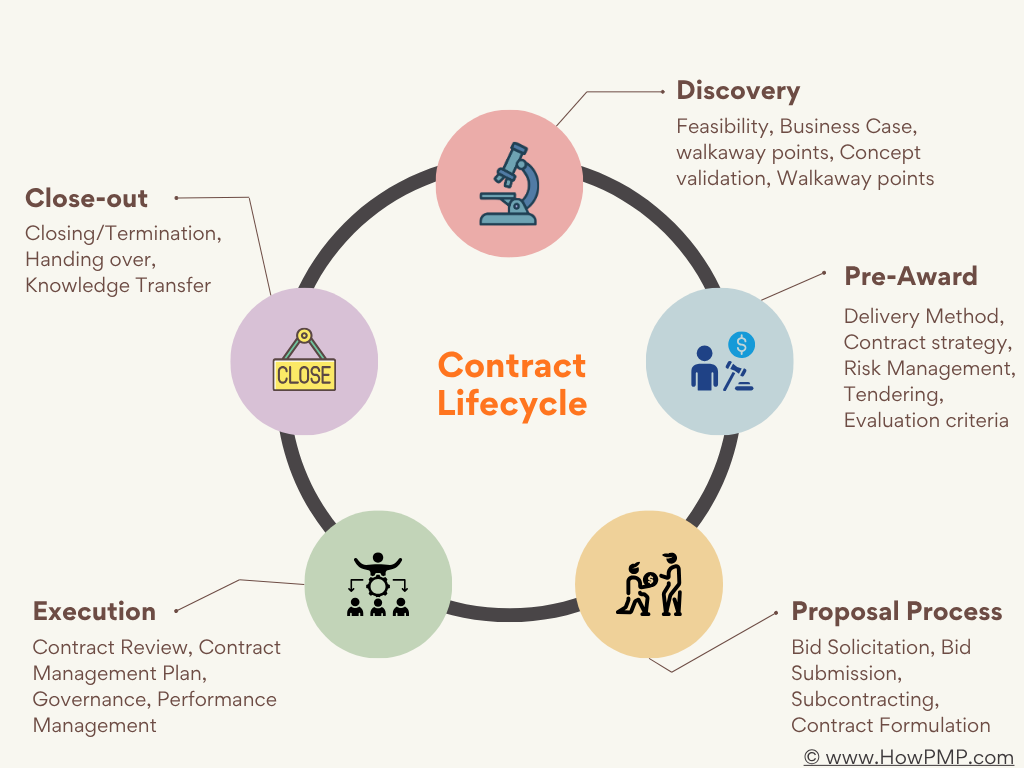
Construction Contract Lifecycle
Managing contracts is critical in construction projects, as each contract must flow through a defined lifecycle to ensure clear obligations and timely delivery. In fact, LexisNexis defines the construction contract lifecycle as “the full process a contract follows from planning and drafting through negotiation, approval, execution, monitoring and renewal”. PMI’s Construction Professional (PMI-CP) exam outlines five major stages of this cycle – Discovery, Pre-Award, Proposal Process, Contract Execution & Management, and Contract Close-out, each with distinct objectives and tasks. In this article, we break down these contract stages with construction-specific examples, actionable tips, and practical steps, so project managers and PMI-Construction Professional (PMI-CP) candidates can confidently navigate contracts from start to finish.
Understanding the Construction Contract Lifecycle
A well-managed construction contract lifecycle creates consistency and transparency. Breaking a complex contract into stages, such as scope definition (feasibility) , tendering, proposal process, execution, and close-out helps teams allocate responsibilities and reduce risks. For construction projects, this means aligning legal documents with project milestones and resources at each phase. In construction Contract Lifecycle Management (CLM) also ensures all terms are tracked: changes, payments, and compliance actions are logged so nothing falls through the cracks. In short, structured CLM builds trust among stakeholders and supports efficient project delivery.
Key takeaways: A clear construction contract lifecycle ties each project phase to contract documents. It starts with identifying needs and ends with formal closeout. Good CLM practices (like approval workflows and digital tracking) improve efficiency and reduce disputes. Here we must understand that Construction contract lifecycle is different from Project Lifecycle, for a successful project both should be aligned.
Phase 1: Discovery (Needs Identification)
Purpose: The discovery phase lays the groundwork by defining why a contract is needed and what it should include. In construction, this often coincides with feasibility or pre-design studies. Key steps include:
- Collaborating with stakeholders (owners, engineers, users) to outline project scope and requirements.
- Documenting project objectives, deliverables, and high-level schedule.
- Market analysis is conducted and business case is established.
- During this phase walkaway point must be agreed by defining the risk thresholds.
Example: For a new school project, the owner’s team would define educational facility requirements, budget constraints, and timeline targets during discovery.
Actionable tips:
- Clarify scope early. Create a concise project brief or charter specifying deliverables and constraints.
- Engage experts. Use market research and technical reviews to inform your contract strategy.
- Short term contract options. Consultants may be engaged or prototyping may be used to validate the concept and initial design.
Phase 2: Pre-Award (Planning and Bidding)
Purpose: In the pre-award phase, the team turns requirements into procurement plans and solicitation documents. This includes:
- Preparing Request for Proposals (RFPs) or Bids, including detailed specifications, schedules, and contractual terms.
- Defining evaluation criteria (technical qualifications, cost, experience) and procurement processes.
- Conducting pre-qualification of contractors/suppliers to ensure they meet project needs.
Example: The construction manager issues an RFP for the school’s general contractor, outlining site conditions, milestones, and payment terms. All potential bidders must meet the owner’s criteria (safety record, financial stability, relevant experience).
Actionable tips:
- Use clear documents. Write unambiguous RFPs with all contract terms and deliverables clearly defined.
- Pre-qualify bidders. Screen firms early to save time during evaluation.
- Plan evaluations. Establish scoring sheets or committees to review proposals efficiently.
Phase 3: Proposal Process (Negotiation and Award)
Purpose: The proposal process involves receiving bids, negotiating terms, and formally awarding the contract. Main activities:
- Distributing the RFP and answering bidder questions (via addenda or Q&A).
- Receiving and evaluating proposals against the established criteria.
- Negotiating final contract terms (price, scope changes, schedules).
- Selecting the winning bid and preparing contract documents for execution.
Example: Contractors submit their bids for the school project by the deadline. The owner compares costs and schedules, then negotiates minor scope adjustments with the preferred bidder before award.
Actionable tips:
- Keep communication open. Hold bid meetings or issue clarifications quickly to prevent misunderstandings.
- Document negotiations. Track all changes during redlining to maintain an audit trail.
- Confirm approvals. Ensure all necessary stakeholders (legal, finance, executives) sign off on the selected contract version before finalizing.
Phase 4: Contract Execution & Management
Purpose: Once the contract is signed, execution focuses on mobilizing resources and managing performance. Contract administration officially begins here and continues through completion. Key tasks include:
- Mobilization: The contractor sets up site offices, hires staff/subcontractors, and procures materials as outlined by the contract.
- Implementation: Work is performed according to contract terms. The project team tracks milestones, deliverables, and quality standards.
- Monitoring & compliance: Project managers verify that parties fulfill obligations. This includes approving invoices, managing schedule, and ensuring safety/regulatory compliance.
- Change management: Any contract amendments (change orders) follow the agreed process – documenting scope changes, costs, and approvals to avoid disputes.
- Communication: Regular progress meetings, reports, and stakeholder updates ensure transparency throughout the project.
Example: During construction, the project manager holds weekly coordination meetings, reviews monthly progress reports (photos, labor logs, payment applications), and issues change orders for unforeseen soil conditions.
Actionable tips:
- Maintain a Contract Management Plan. Document who handles change orders, communications, and record-keeping.
- Use technology. Centralize contract documents in a repository or CLM software for easy tracking of milestones and obligations.
- Stay proactive. Monitor critical dates (permits, inspection tests) and send reminders to prevent missed deadlines.
Phase 5: Contract Closeout
Purpose: Closeout is the final phase and wraps up all contractual obligations. According to PMI guidance, closeout “is the successor to all other work performed under the contract and the final set of activities between the buyer and seller”. This ensures the contract is fully completed and documented. Key activities include:
- Verifying completion of all deliverables (tests, inspections, training) and obtaining formal acceptances.
- Document final deliverables: Submitting as-built drawings, operation & maintenance manuals, warranties, and spare parts inventories.
- Finalize payments: Reconciling all payments, releasing retainage to the contractor and subs, and closing out any financial incentives or liquidated damages.
- Settling claims and changes: Resolving outstanding change orders or claims, and processing final contract modifications.
- Archiving records: Transferring contract records to storage (digital or EDMS) and handing off closeout documentation to the owner.
- Lessons Learned: Documenting what worked or didn’t (e.g. contract clauses, schedule estimates) for continuous improvement.
Example: At the end of the school build, the project team conducts punch-list inspections, confirms all milestones are met, submits the contractor’s final pay application, and archives the project file.
Actionable tips:
- Use a closeout checklist. Create a Division 1 specification or tabulated list of all closeout deliverables (photos, training, warranties) to confirm nothing is missed.
- Hold a final meeting. Conduct a closeout workshop with the contractor to review pending items and sign off.
- Review for lessons. Have the team reflect on contract effectiveness (e.g. incentive/damage clauses, supply issues) to improve future contracts.
| Construction Contract Lifecycle Phase | Key Activities / Documents |
|---|---|
| Discovery (Needs Identification) | Define scope and objectives; feasibility studies; stakeholder alignment; draft requirements and contract strategy. |
| Pre-Award (Planning/Bidding) | Prepare RFP/Bid documents; establish evaluation criteria; prequalify bidders; plan procurement schedule. |
| Proposal (Negotiation/Award) | Solicit bids, answer questions; evaluate proposals; negotiate terms; finalize contract clauses; award contract. |
| Execution & Management (Administration) | Mobilize team; monitor progress (schedules, quality, payments); manage changes; enforce compliance; maintain records. |
| Closeout (Completion) | Inspect final deliverables; settle payments and claims; submit O&M manuals, as-builts, warranties; archive records. |
Conclusion
The construction contract lifecycle is the backbone of any project’s success. By understanding and managing each of these five phases – from initial discovery through final closeout – project managers can prevent disputes, control costs, and deliver projects on time. For PMI-CP candidates and construction professionals alike, mastering contract lifecycle management builds authority and supports both exam preparation and real-world performance.
Call to action: Start applying these best practices today. Review your next contract with a clear lifecycle checklist, involve all stakeholders early, and document every step. A robust contract management process not only helps you ace PMI-CP certification topics, but also drives successful project outcomes in the field.
FAQs
Q: What are the main stages of the construction contract lifecycle?
A: The construction contract lifecycle typically includes five stages: Discovery (identify needs and scope), Pre-Award (plan procurement and issue RFP), Proposal Process (receive and negotiate bids), Contract Execution & Management (perform and administer the contract), and Contract Closeout (complete deliverables and finalize payments).
Q: Why is construction contract lifecycle management important for project managers?
A: Effective CLM ensures that every contract activity – from drafting terms to delivering the final handover – is well-coordinated. This reduces the risk of missed obligations or costly disputes. As LexisNexis notes, a structured contract lifecycle helps handle contracts “consistently and strategically,” boosting efficiency and compliance.
Q: What should I focus on during contract closeout?
A: Closeout requires confirming all contractual obligations are met. This includes verifying final deliverables, settling change orders and final payments, and collecting final documentation (as-built drawings, O&M manuals, warranties). A thorough checklist and final acceptance reports can help ensure nothing is overlooked.
Q: How can I prepare for PMI-CP questions on construction contract lifecycle?
A: Review each contract phase in detail, focusing on construction-specific examples. Know the key activities in each stage (as outlined above) and understand common contract clauses (e.g. change orders, dispute resolution). Practice sample exam questions that link contract phases to processes, since PMI-CP tests practical application in a built-environment context.
Pingback: The Discovery Phase of The Construction Contract Lifecycle: Secrets to Success - PROJECT MANAGEMENT